01
Buried building traces
Excavations documented structural remains of the village that no longer stand above ground: piers, footings and floors preserved under leaf litter and flood sediment.
Passport in Time
Scull Shoals has been dug, mapped and puzzled over by Forest Service archaeologists and volunteers since 1997. Most of the village is gone from sight. Under the leaf litter, it is still there.
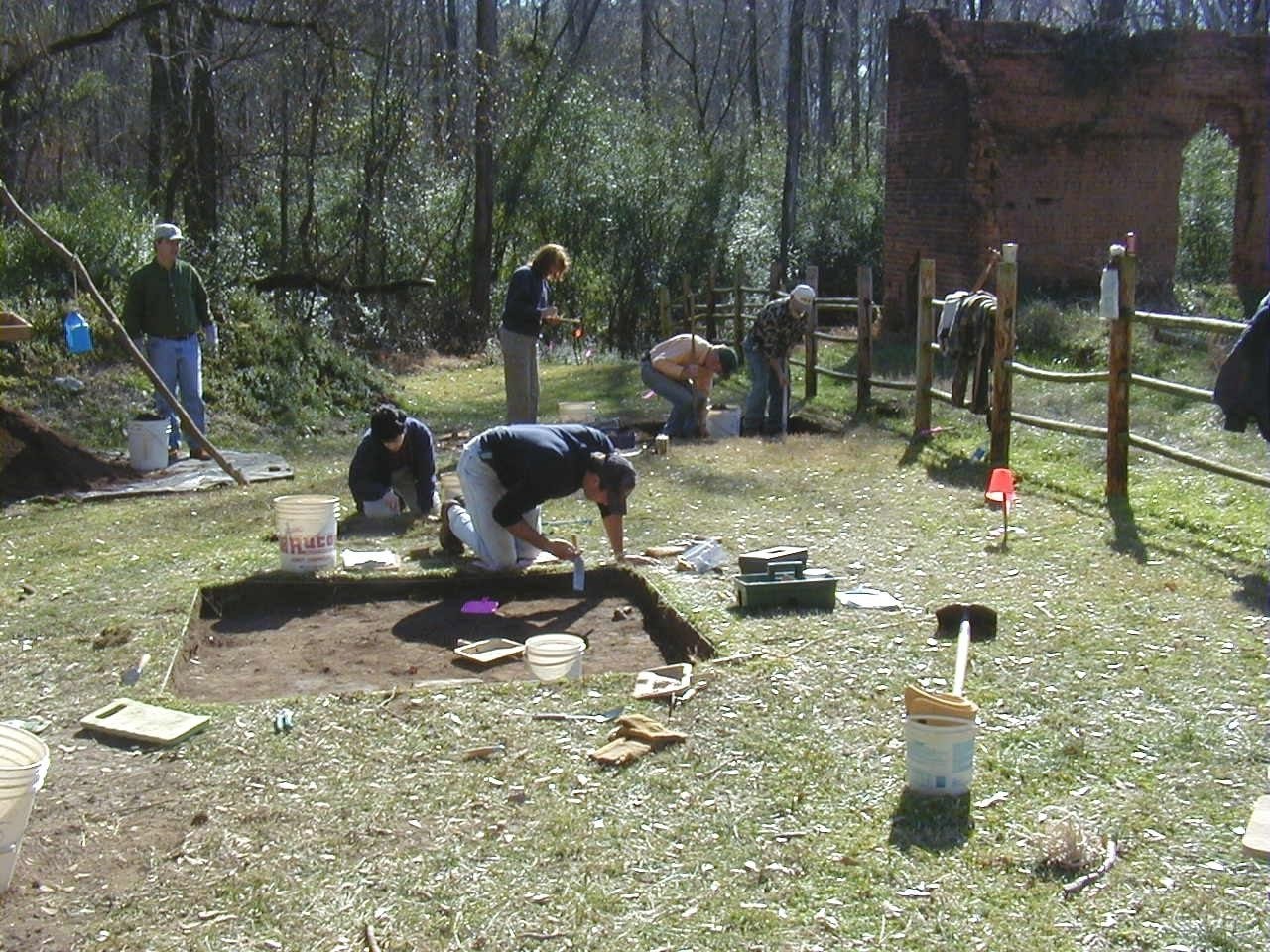
FOSS volunteers dig into the Scull Shoals story
In 1997 the Forest Service brought Passport in Time to Scull Shoals. PIT is a national volunteer programme that puts members of the public on real archaeological projects alongside professional archaeologists, and the mill village was a natural fit: rich documents, standing ruins and a great deal of ground with nothing visible on it at all.
Friends of Scull Shoals volunteers worked under Forest Service and professional supervision in the “Two Chimney” area of the village. They opened units, troweled, screened and bagged, and learned to read a soil profile. Work continued into the early 2000s.
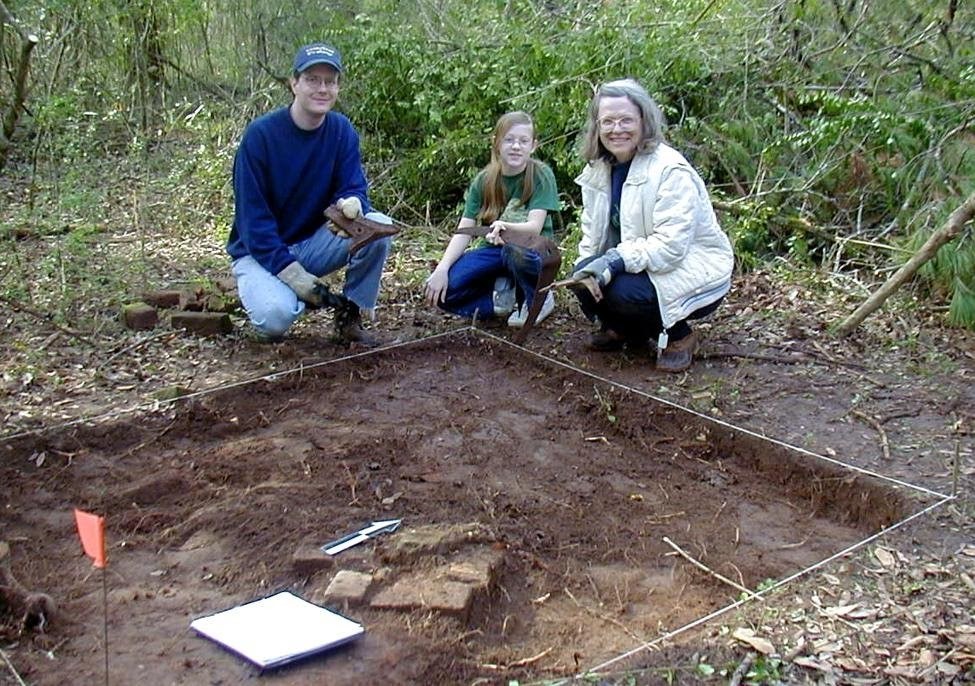
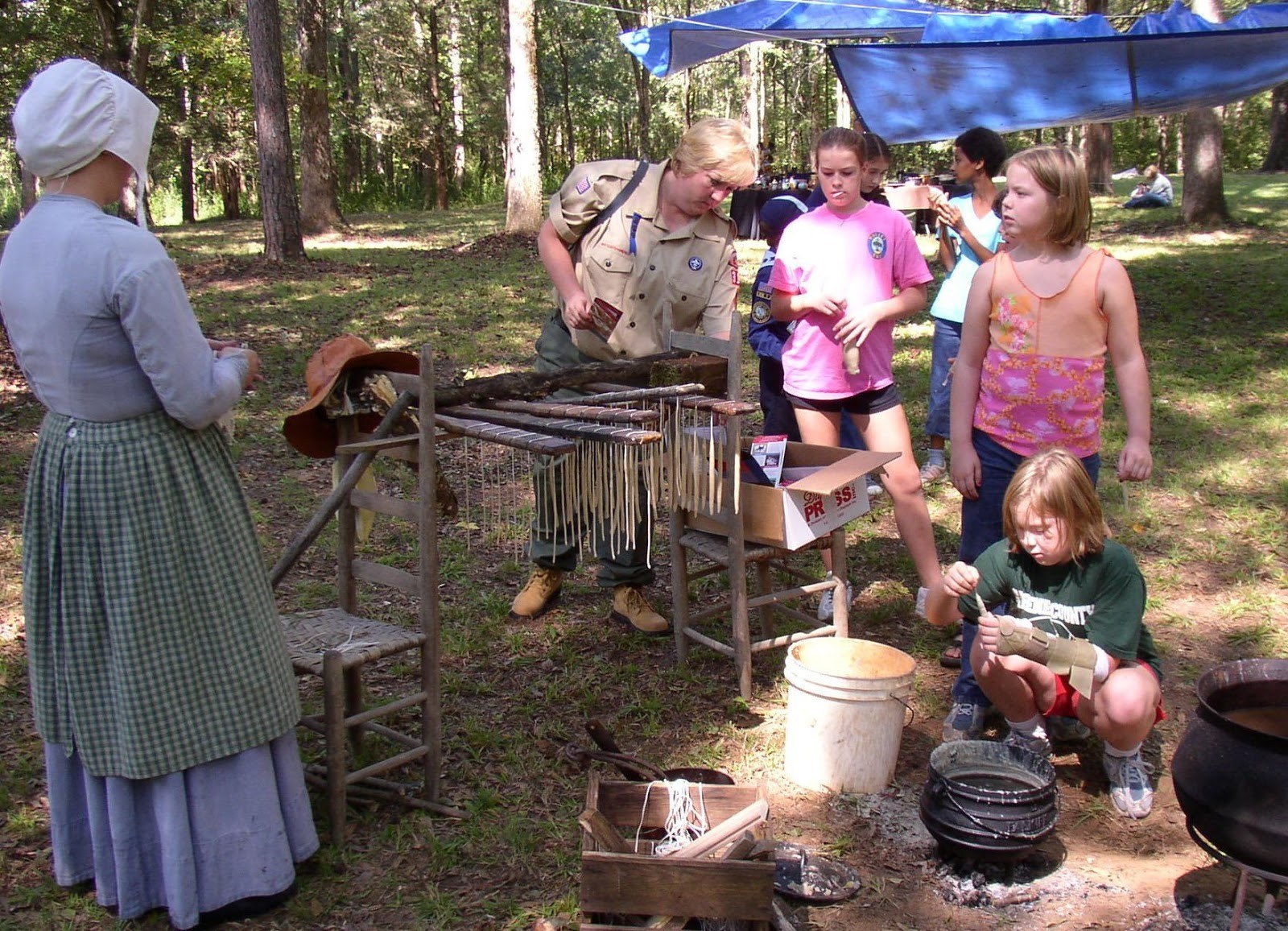
The project was as much about people as potsherds. Families dug together, school groups visited, and a 19th-century crafts demonstration showed what daily work in the village would actually have felt like.
From the dig
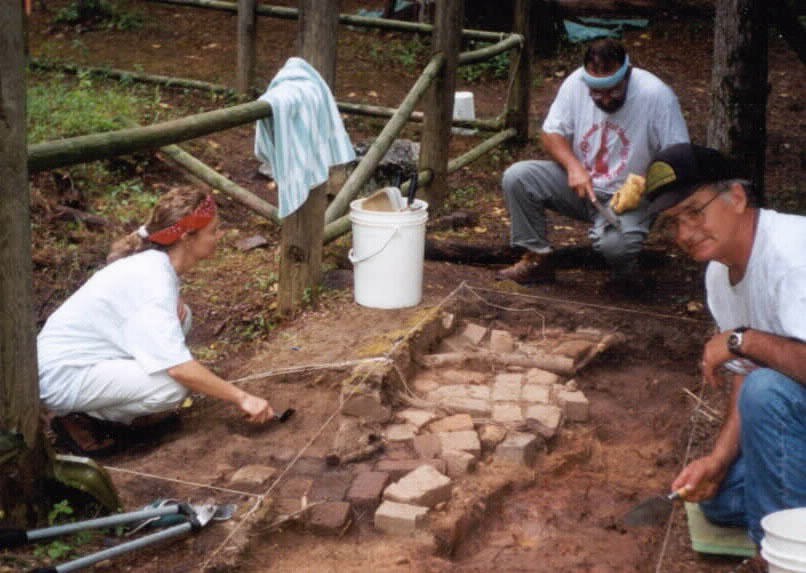
Photographs from the Friends’ archive, taken during the Passport in Time seasons.
What the digging found
No single report has been published for every season, so the record lives in field notes, photographs and the Forest Service files. What the work established is clear enough.
01
Excavations documented structural remains of the village that no longer stand above ground: piers, footings and floors preserved under leaf litter and flood sediment.
02
Laid brick paving, such as the floor uncovered in the pre-1840 saddlebag worker house, shows how mill hands and their families lived beside the factory.
03
Ceramics, glass, nails and bone recovered from units and screens date the occupation of the village and hint at household routines, trade and diet.
04
Later geophysical and sediment studies suggest that substantial mill and village remains lie buried beneath layers laid down by the Oconee’s floods.
The Two Chimney area
The name is a local one, kept by the people who worked the site. It marks the part of the village where the Passport in Time units were concentrated.
Standing chimneys are the last vertical survivors of most Georgia mill villages, and at Scull Shoals the brick stacks became a landmark for the dig. Around them, the survey found the quieter evidence of the households that supported the mills.
The 1997 season opened test excavations in this area. Volunteers recorded brick floors, pier foundations and sheet middens, the thin scatters of broken dishes, bottle glass and animal bone that mark where a family threw its rubbish out the back door.
Because the village was abandoned rather than rebuilt, those deposits stayed largely intact. That is rare in Georgia, and it is why the site still matters to archaeologists.
The village the mills builtHow a season works
Volunteers are taught every step. No experience is needed to join a Passport in Time project, only patience and a willingness to get dirty.
Walk the ground, read the LiDAR and the old maps, and look for the low mounds and brick scatters that mark a building.
Lay out a square, cut the leaf litter, and remove soil in thin levels so that every change in colour is recorded.
Sift the dirt, bag the artifacts by provenience, and write it all down. A find without its context is just an object.
Draw the plan and profile, photograph the feature, then return the soil. The site is left as it was found.
Visit with care
Scull Shoals sits on federal land in the Oconee National Forest. Archaeological sites here are protected by law, and every sherd left in place keeps the story intact for the next researcher.
Plan a visitStill digging
Friends of Scull Shoals supports research at the village and keeps the archive that makes it possible. Members fund the work, and volunteers do it.